Raphael’s The Sistine Madonna
The Sistine Madonna
Raphael · c. 1512–1513
Gemäldegalerie Alte Meister, Dresden
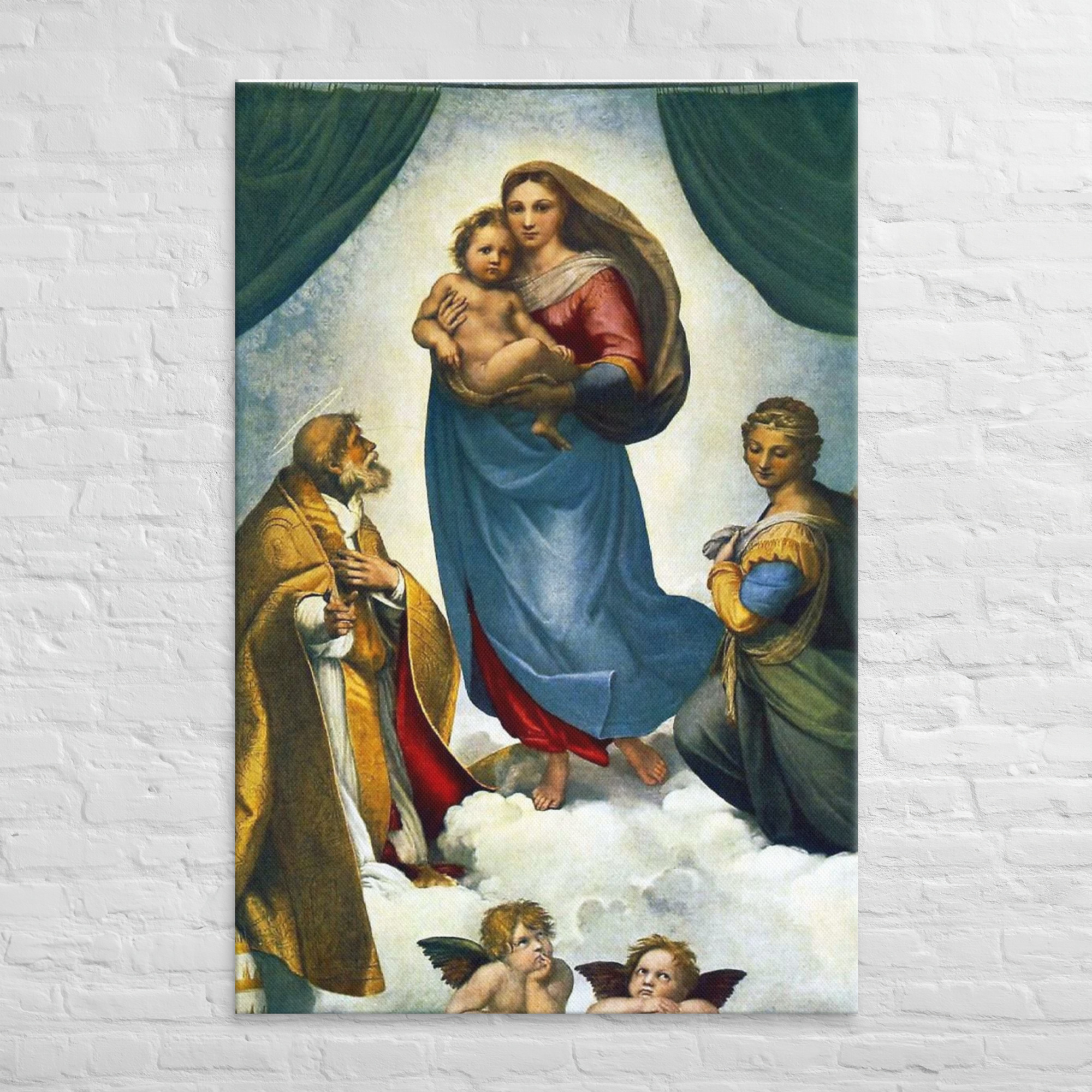
In Raphael’s Sistine Madonna, the Virgin Mary steps forward through parted curtains, holding the Christ Child in her arms. She appears to emerge from heaven itself, carrying her Son toward the world.
Painted for the Benedictine church of San Sisto in Piacenza, the work presents Mary and Jesus accompanied by Saint Sixtus and Saint Barbara. Below them, two cherubs rest upon a ledge, gazing upward.
Mary Brings Us Her Son
Saint Sixtus gestures outward, beyond the painting, toward the space occupied by the viewer. Saint Barbara lowers her gaze in quiet reverence.
Mary looks directly ahead. Her expression is tender yet solemn, and the Christ Child appears unusually serious for an infant. Their expressions have often been understood as anticipating the suffering that awaits Jesus.
Behind them, the clouds are filled with faint angelic faces. The parted curtains give the scene the character of a revelation: heaven opens, and the Mother of God presents the Savior.
Raphael invites us to contemplate Mary’s vocation as Theotokos, the Mother of God. She holds the eternal Son who truly became man for our salvation.
Visio Divina · The Child Before You
Stand before the painting and look into Mary’s eyes. She holds her Son, yet her gaze meets yours.
Look at the Christ Child. Notice His solemn expression and the way He rests securely in His mother’s arms.
Imagine yourself standing where Saint Sixtus gestures, directly before Mary and Jesus.
Mary has brought her Son before you. What would you say to Him?
Remain with that question. Look at His face and offer Him the words that come to your heart.
Blessed Mother, lead me always to your Son. Lord Jesus, grant me the grace to recognize You, to love You, and to follow You. Amen.
A Masterpiece for Your Home
Raphael’s magnificent Sistine Madonna, reproduced on canvas. A celebrated masterpiece of High Renaissance sacred art.
Bring This Masterpiece Home →Discover more masterpieces of Catholic art, their sacred symbolism, and contemplative reflections.
← Explore the Sacred Art Collection